
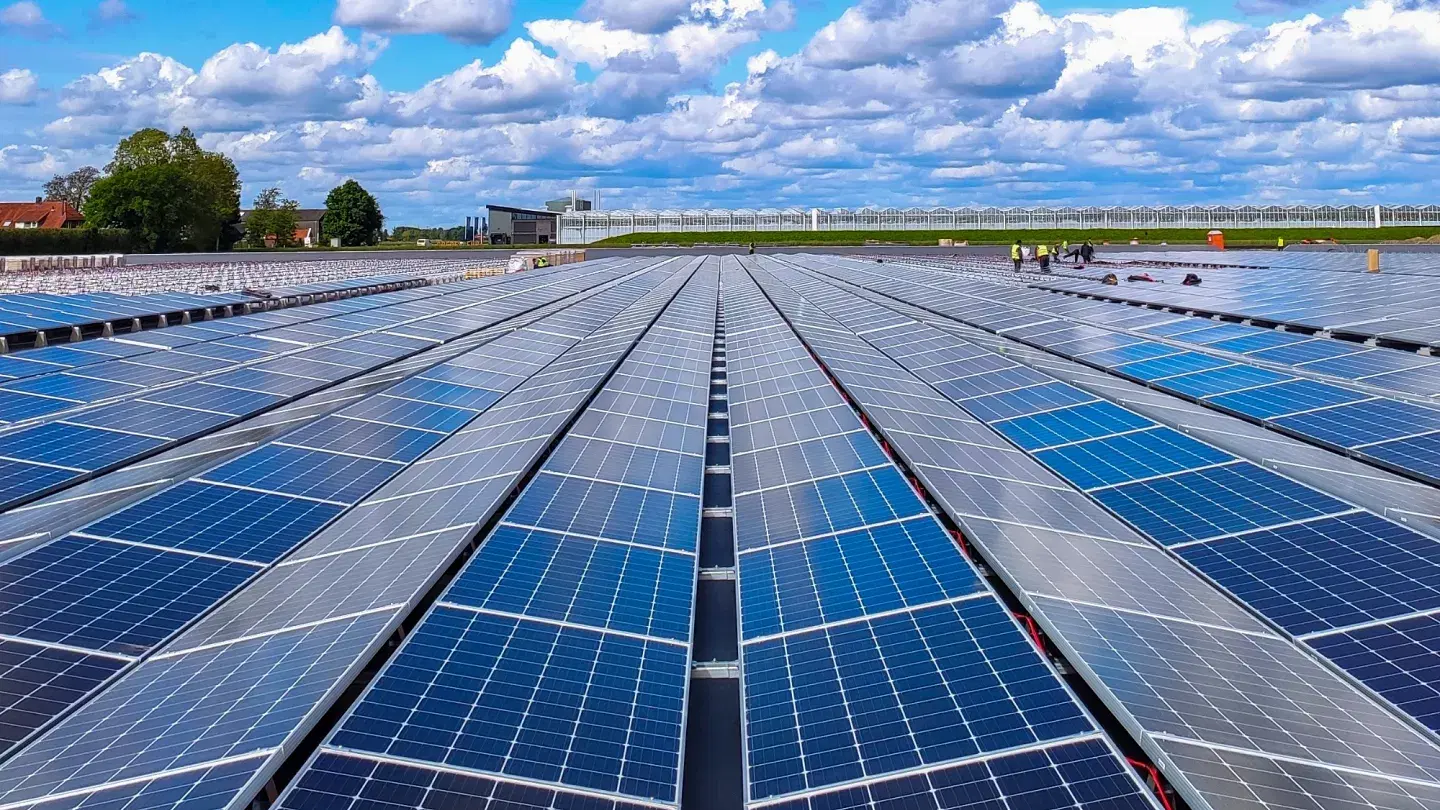
Large ground-mounted solar array under inspection

Inspection

Our software WaveForm delivers time-indexable 3D reconstruction from commodity hardware, so you can track equipment condition over time, find degraded assets early, and schedule maintenance before something fails.

WaveForm

WaveForm is our inspection and condition-tracking platform, built on time-indexable 3D reconstruction from commodity hardware. Rather than relying on expensive specialized sensors or one-off surveys, it uses off-the-shelf cameras and our software to build accurate, repeatable 3D models of your assets over time.

That time dimension is what makes the difference. We can compare condition today to condition last month or last year, surface degradation early, and direct maintenance to the right equipment at the right time, before failures cause downtime or safety issues.

What You Get

Capture With Hardware You Already Own

WaveForm reconstructs from ordinary cameras. A phone, a handheld camera, or a camera flown on a standard drone is enough. There is no proprietary sensor to buy, calibrate, or insure, which is what makes repeat capture affordable.

Compare Condition Across Visits

Each capture is indexed in time and aligned to the last one. You are looking at how a specific asset changed between March and September, not at two unrelated photo sets someone has to eyeball.

Direct Maintenance at Specific Equipment

Degradation surfaces as a located change on a model, so work orders point at a position on the site rather than at a row in a spreadsheet. That is the difference between a scheduled sweep and a targeted repair.

Built for Field Conditions

The platform came out of our own construction and operations work on solar and storage sites, which is where its assumptions about dust, access, weather, and crew time come from.

What Running It Actually Requires

Repeat inspection only pays off if repeating it is cheap. These are the practical requirements, in full.

What you need on site

A camera and someone to walk or fly the route. A phone, a handheld camera, or a camera on a standard drone all work. No proprietary sensor, no survey-grade equipment, no calibration rig.

What a first capture involves

A defined capture route so every visit covers the same ground the same way, then the walk itself. Repeatability is what makes later comparisons meaningful, so the first visit is where we spend the setup effort.

Who performs repeat captures

Your own crew, in most cases. Capture is deliberately low-skill so it can ride along with an existing site visit rather than requiring a mobilization of its own. We can also perform captures where you would rather we did.

What you get back

A reconstructed model per visit, aligned to the previous one, with located changes surfaced against it. Findings export for whatever work-order system you already run.

Who WaveForm Is For

  • Asset owners tracking degradation across a portfolio
  • O&M providers planning corrective work between site visits
  • EPCs documenting as-built condition at handover
  • Insurers and lenders requiring periodic condition evidence
  • Public agencies with recurring inspection obligations

Award-Winning Technology

The technology behind WaveForm has won the DOE and NREL American-Made Challenge Grand Prize and the American-Made Solar Prize Round 8, and it is developed in the NVIDIA Inception and Google Cloud for Startups programs.

Questions We Get

What hardware do we have to buy?
None that is specific to WaveForm. It reconstructs from ordinary cameras, which is the point: a proprietary sensor makes the first capture affordable and every capture after it expensive, and repeat capture is where the value is.
How often should a site be captured?
Often enough that a change is caught while it is still cheap to fix, which for most solar assets means quarterly or alongside an existing scheduled visit. Sites with known degradation issues or a warranty claim in progress justify more.
Does this replace our inspection provider?
Not necessarily. It changes what an inspection produces, from a folder of photos into a comparable record. Some clients run it themselves, some have us run it, and some hand it to the O&M provider they already use.
What does it cost?
Pricing depends on site count, site size, and capture frequency, and we scope it against those rather than publishing a rate that would be wrong for most people. Tell us what you inspect today and how often and we can be specific quickly.
Where does our data live?
That is a decision made per engagement, and we will put the answer in writing before any capture happens. Asset condition data is commercially sensitive and some owners have contractual constraints on where it can sit.

See WaveForm on Your Site

Tell us what you are inspecting today and how often. We will tell you whether WaveForm changes anything for you, and what a first capture would involve.